Runways, Regions and Power: Why Heathrow’s Third Runway Is Geopolitical
Geopolitics is usually associated with borders, war, diplomacy and natural resources. Yet infrastructure can be just as geopolitical, because it decides which places are connected to global flows of people, capital, goods and ideas. In this sense, Heathrow’s proposed third runway is not just a planning issue. It is also a question about how Britain distributes opportunity.

Supporters argue that expansion would strengthen the UK’s global connectivity, boost trade and make Britain more competitive. This is persuasive. Airports are not simply transport sites, but nodes in international networks. While Heathrow is the busiest airport in Europe, it is running at maximum capacity leaving no room for more flights and no scope to absorb delays, a larger Heathrow could help the UK compete with hubs such as Schiphol, Charles de Gaulle and Dubai. In a globalised economy, connectivity matters. If Britain wants to attract investment, tourism and business, then having a major international hub seems, at first, like an obvious advantage.
However, the key geographical issue is not only whether expansion creates growth, but where that growth occurs. Heathrow sits in London and the Southeast, already the UK’s dominant economic core. Expanding it would concentrate further investment, business travel and freight into the same region, reinforcing a core–periphery divide between London and north/deep west country. This is where the issue becomes more than just transport. It becomes about the spatial organisation of power and money within the UK.
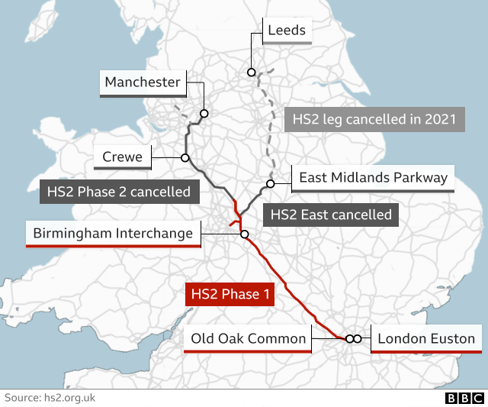
The counterargument to expansion, however, is that Heathrow already acts as a national hub, linking regional airports to long-haul destinations and expansion would reinforce this hub-and-spoke model. This is important, and it would be wrong to ignore it. For some regions, access to Heathrow may provide better links to global markets than they could achieve alone. But this can also increase dependence on London. If firms in northern or peripheral regions must connect through Heathrow to access global markets, then London remains the gatekeeper of Britain’s international connectivity. The region may be “connected”, but only through the centre. One solution that has been attempted is the long overdue and overbudget HS2 railway between the northern cities and London, an attempt to link the two, however with little success.
This matters because infrastructure does not just respond to economic geography; it actively shapes it. Once a place becomes better connected, it tends to attract more firms, more investment and more skilled workers. That can create a cycle where already-successful places become even more successful. Heathrow expansion could therefore strengthen London’s role as Britain’s global gateway, while forcing other regions to remain secondary. It may not deliberately create inequality, but it could still deepen it by reinforcing existing patterns.
There is also a local inequality problem. The benefits of expansion are often presented nationally, while the costs - noise, pollution, congestion and land-use pressure - are concentrated around Heathrow. This reveals a classic characteristic of major infrastructure projects; HS2 is another example: national growth, local costs and uneven regional outcomes. People living near the airport may mostly experience the disruption, while the profits and wider economic gains are spread elsewhere. This makes the project politically sensitive, because the people who bear the costs are not always the same people who receive the benefits.
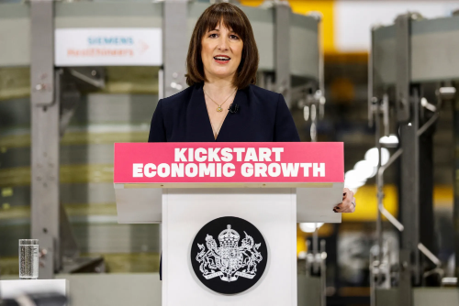
The third runway expansion has been particularly political recently. Since the initial plan in 2003, the plan has been approved and disbanded four times. After recent reapproval in 2025 by Labour Chancellor Rachel Reeves, in her plan to ‘Kickstart economic growth’, which has failed when looking at growth figures, the Mayor of London Sadiq Khan said he would take the government to court over the approval. Due to this being one of Reeves’ only successes (if it can be called that), she stood her ground stating this is ‘essential’ to the growth of the UK economy and she will fight, and win, any legal claims made against her party. Although, it is unlikely Khan will remain in office long enough to challenge the government due to his approval rating of –33 in July 2025.
Environmental concerns make this even more complicated. A third runway would increase capacity at a time when the UK is trying to reduce emissions and meet climate commitments. Supporters may argue that cleaner aviation technology, sustainable fuels and efficiency improvements can reduce the impact. But these mitigants are uncertain and unevenly distributed. Wealthier passengers and businesses benefit from increased mobility, while poorer communities may experience worse air quality and noise. So even the environmental debate has a geographical dimension.
Heathrow expansion should therefore not be reduced to “growth versus environment”. The deeper question is whether Britain’s infrastructure choices spread opportunity or intensify existing spatial inequalities. A third runway may increase national output, but aggregate growth can hide uneven development. GDP may rise, but that does not automatically mean that opportunity is more fairly distributed across regions.
Ultimately, Heathrow’s third runway is geopolitical because infrastructure is power. It shapes which places are connected, which regions attract investment, and which communities bear the costs. The real question is not simply whether Britain needs more runway capacity, but who gets connected, who pays, and which places are allowed to matter.